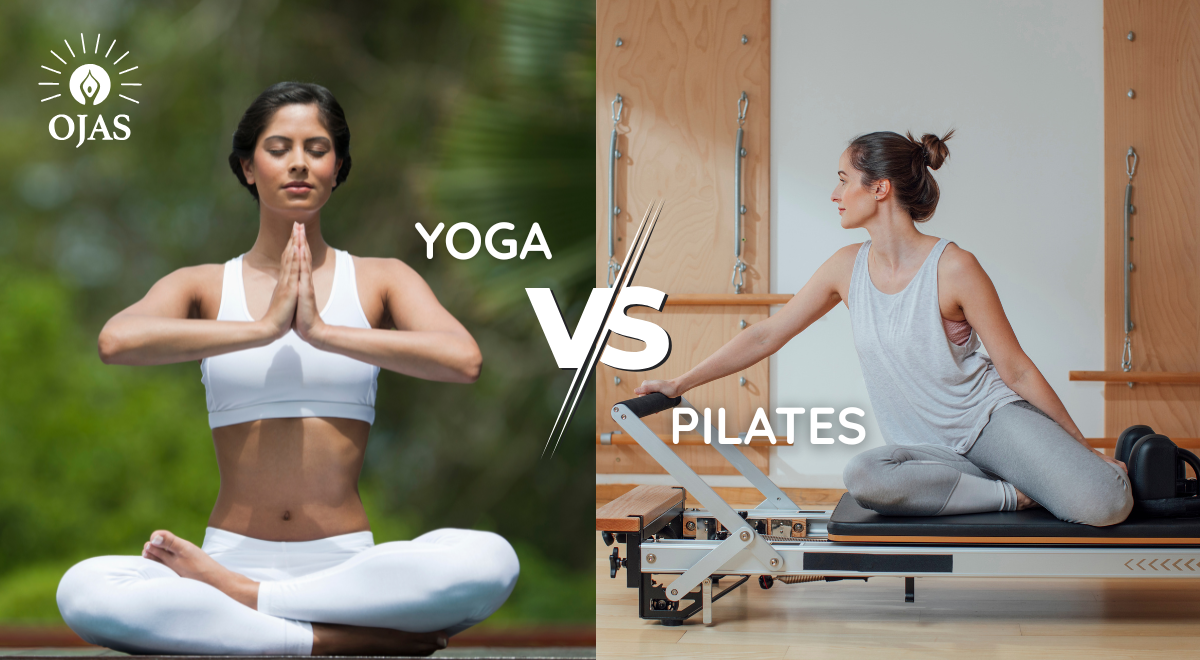
The question is not which practice is better. It is which practice is better for the specific way your body is currently failing you.
That distinction matters because Pilates and Yoga are not different intensities of the same intervention. They are different interventions entirely — targeting different tissue systems, operating on different biomechanical principles, and producing different physiological outcomes. A person choosing between them based on aesthetic preference or social recommendation is making the equivalent of choosing between antibiotics and physiotherapy on the basis of which one has a better website.
In May 2026, the Mindbody Wellness Index recorded over 12 million active monthly searches for low-impact fitness alternatives to high-intensity interval training — a cohort that includes post-surgical patients, desk-bound professionals with chronic postural complaints, and athletes managing cumulative wear-and-tear. The majority of those searchers will encounter articles that tell them Pilates is for core strength and Yoga is for flexibility, and will remain no better equipped to make an informed decision. This article goes further: into the biomechanics, the neuromuscular mechanisms, the specific injury profiles of each practice, and a structured framework for choosing and combining them based on your body’s actual kinetic profile.
Quick answer: Pilates prioritises deep core stabilisation and controlled resistance through a closed kinetic chain. Yoga prioritises joint mobility, connective tissue adaptation, and nervous system regulation through breath-integrated movement. Neither is universally superior. Both are necessary for most bodies living sedentary professional lives.
The modern desk-bound professional often presents with the same combination of dysfunction: weak deep stabilisers, restricted thoracic mobility, shortened hip flexors, and chronically elevated nervous system stimulation. That specific profile — not a general interest in wellness — is what this guide is built around.
What Is the Core Difference Between Pilates and Yoga?
The core difference is the target tissue and the mechanism of change. Pilates primarily trains the neuromuscular system — specifically the deep stabilising muscles of the lumbo-pelvic-hip complex — through controlled, resistance-based movement. Yoga primarily adapts the connective tissue and autonomic nervous system through sustained postures, breath regulation, and progressive mobility work.
Joseph Pilates developed his method — originally called Contrology — in Germany in the early 20th century as a rehabilitative system for injured soldiers and circus performers. The central premise was that the “powerhouse” (what we now call the deep core — the transverse abdominis, pelvic floor, multifidus, and diaphragm) governs all movement quality, and that training it with precision and intentionality prevents and reverses physical dysfunction. Pilates was, from its inception, a clinical exercise science delivered in movement form.
Yoga originates in ancient India across a lineage spanning more than 5,000 years. The physical postures — asana — represent one limb of an eight-limbed system (Patanjali’s Ashtanga) whose broader aim is the stilling of mental fluctuation. Modern studio yoga has largely separated the asana practice from its philosophical context, but the physical architecture of the practice retains its original orientation: breath as the primary organising principle, the body as the instrument of consciousness, and stillness as the training target rather than movement. Pranayama — the conscious regulation of breath — is not a warm-up technique. It is the mechanism by which yoga produces its most measurable physiological effects.
The practical implication of this distinction: Pilates trains the body to move better. Yoga trains the body and nervous system to be still better. Both matter. The professional who has neither deep core stability nor the capacity to access genuine physical and mental stillness is operating below their structural potential in both directions.
Is Pilates or Yoga Better for Flexibility?
Yoga produces greater flexibility gains. A 2026 study in the Journal of Sports Science found that yoga practitioners showed a 20% greater improvement in hamstring and shoulder flexibility compared to Pilates practitioners over the same training period. The mechanism is the sustained passive stretch that targets fascia and connective tissue — particularly in Yin Yoga’s 3–5 minute holds — which alters the viscoelastic properties of tissue in ways that the controlled, shorter-range movements of Pilates do not replicate.
Pilates does improve functional mobility — the range of motion available during movement — but prioritises joint stability over end-range flexibility. For a hypermobile practitioner (one whose joints already exceed normal range), Pilates is the more appropriate intervention: adding further flexibility to an unstable joint increases injury risk rather than reducing it.
Practitioner takeaway: If your movement is restricted and your joints are stable, prioritise yoga for flexibility. If your joints are already mobile but your movement control is poor, prioritise Pilates for stability before adding more range.
Which Is Harder — Pilates or Yoga?
Neither is inherently harder. Both practices have entry points accessible to complete beginners and progressions that challenge elite athletes. The perceived difficulty of each depends almost entirely on the mismatch between the practice’s demands and the practitioner’s current physical profile.
Pilates feels hardest for practitioners with weak deep core muscles — the transverse abdominis and pelvic floor that are chronically underactivated in desk workers and postpartum individuals. Movements that look simple produce visible effort because the target muscles have not been trained. Yoga feels hardest for practitioners with restricted hamstrings, tight hip flexors, and the thoracic rounding that accumulates from years of screen work — the positions that look simple in a class photo are physiologically inaccessible until the appropriate tissue length has been developed.
The difficulty question is therefore a diagnostic question. What feels hardest tells you what your body most needs.
What Are the Primary Classifications of Pilates and Yoga Styles?
Both practices contain a spectrum of intensity and mechanism that the generic category name does not communicate. “I do Pilates” is as imprecise as “I drive a car.” The classification below maps the styles that are most clinically and practically relevant for the populations most likely to be comparing them.
Pilates: Mat vs Reformer
Mat Pilates uses bodyweight and gravity as resistance. It is accessible (no equipment), portable, and well-suited to practitioners in the low-to-intermediate strength range. The limitation of mat Pilates is that it cannot accommodate progressive overload with the precision of equipment-based work — once a practitioner can perform the classical mat repertoire with correct form, the resistance ceiling requires equipment to overcome.
Reformer Pilates uses a spring-loaded carriage system to provide variable resistance across the full range of movement. The Reformer allows both concentric and eccentric loading — the eccentric (lengthening under load) component is where the most significant gains in deep core recruitment and muscular endurance are produced. For rehabilitation contexts, the Reformer’s resistance can be adjusted to work within a pain-free range that mat work cannot always accommodate. The Cadillac, Wunda Chair, and Spine Corrector extend this further, targeting specific kinetic chain segments with greater isolation than the Reformer alone provides.
Clinical Pilates — Reformer or mat-based Pilates delivered by a physiotherapist or movement specialist in a rehabilitation context — is the highest-specificity form of the practice. It is the version most supported by the clinical literature for back pain, pelvic floor dysfunction, and post-surgical rehabilitation.
Yoga: Active vs Passive Styles
Vinyasa Yoga links breath to continuous movement — one breath per transition, generating cardiovascular demand, internal heat, and muscular endurance simultaneously. It is the most physically dynamic form of modern yoga and the most demanding on shoulder and wrist joint integrity given the frequency of Chaturanga (low push-up) transitions in most sequences.
Hatha Yoga holds individual postures long enough for alignment instruction and neuromuscular learning. The pace allows a practitioner to develop the proprioceptive awareness that Vinyasa’s speed often bypasses. For practitioners new to yoga, Hatha provides the technical foundation that makes every subsequent style safer and more effective.
Yin Yoga applies sustained, passive loading to fascia and joint capsules — 3–5 minute holds at low muscular activation. The tissue target (connective tissue rather than muscle) and the mechanism (plastic deformation through sustained stress) make Yin physiologically distinct from both active yoga styles and all forms of Pilates. It is the most appropriate intervention for the specific tissue restrictions that desk work produces.
The full comparison of Yin, Hatha, and Vinyasa — including which style addresses which specific corporate health complaint — is covered in the Ojas Yoga style comparison guide.
How Do Pilates and Yoga Affect the Body’s Kinetic Chain and Biomechanical Strain Vectors?
Pilates loads the kinetic chain through closed-chain, resistance-based movements that emphasise co-contraction of the deep stabilisers. Yoga loads it through open-chain, bodyweight-based positions that emphasise end-range mobility and fascial adaptation.
The kinetic chain is the interconnected system of joints, muscles, and connective tissue through which force is transmitted and absorbed during movement. A failure at any segment — weak hip abductors causing knee valgus, restricted thoracic rotation causing cervical compensation, inhibited transverse abdominis causing lumbar hyperextension — produces compensatory loading upstream and downstream that accumulates as the chronic pain patterns most desk workers carry.
Biomechanical strain vectors differ meaningfully between the two practices:
| Movement Context | Pilates Strain Vector | Yoga Strain Vector | Injury Risk if Form Fails |
|---|---|---|---|
| Spinal flexion (Roll-up / Forward Fold) | Controlled segmental flexion with deep core bracing; compressive load managed through abdominal activation | Passive posterior chain lengthening; shear force at lumbar disc if core is disengaged | Pilates: disc compression if core releases. Yoga: lumbar disc herniation at L4-L5 or L5-S1 |
| Spinal extension (Swan / Backbend) | Controlled thoracic extension with posterior chain activation; lumbar protected by deep stabiliser engagement | Uncontrolled lumbar hyperextension common in beginner backbends; compression at facet joints | Pilates: minimal if form maintained. Yoga: facet joint irritation if lumbar compensates for thoracic restriction |
| Hip loading (Single leg work / Warrior) | Closed-chain hip stability; gluteus medius and deep hip external rotators under controlled resistance | Open-chain hip mobility; adductor and IT band under sustained passive stretch | Pilates: hip flexor strain if anterior tilt uncorrected. Yoga: SI joint stress in lunges if pelvis not stabilised |
| Shoulder loading (Plank variations) | Scapular stabilisation under load; serratus anterior and lower trapezius activated through resistance | Repeated Chaturanga transitions load anterior shoulder structures; rotator cuff fatigue in high-volume Vinyasa | Pilates: minimal. Yoga: rotator cuff tendinopathy, impingement in high-frequency Vinyasa practice |
What Is the Kinetic Alignment Integration Protocol?
The Kinetic Alignment Integration Protocol (KAIP) is a structured framework for systematically identifying kinetic chain imbalances and prescribing Pilates, yoga, or a combined programme based on the specific mechanical deficit — rather than preference, trend, or generic recommendation.
The protocol operates across four stages:
- Assessment — identify the primary kinetic dysfunction: hypermobility vs hypomobility, stabiliser weakness vs global muscle dominance, restricted fascial planes vs joint capsule limitation
- Prescription — assign the primary intervention: Pilates for instability and neuromuscular deficit; Yoga for fascial restriction and nervous system dysregulation; combined programme for the majority of desk-work presentations that carry both
- Integration — structure the weekly training calendar so the two practices support rather than antagonise each other (detailed in the recovery section below)
- Progression — reassess quarterly; as the primary deficit resolves, adjust the balance between practices
Neuromuscular recruitment is the key variable that determines which practice addresses which deficit. Pilates specifically trains the recruitment pattern of the deep stabilising system — the transverse abdominis, pelvic floor, multifidus, and deep hip external rotators — which is consistently underactive in sedentary populations. These muscles do not respond to general fitness training in the way global muscles do. A practitioner who can deadlift their bodyweight and run a 5K may have profoundly underactivated deep stabilisers. Pilates targets this gap directly.
How Can You Detect Postural Imbalances and Choose the Right Practice?
Three observable patterns indicate which practice to prioritise. None requires clinical assessment — each is identifiable through simple self-observation.
Pattern 1: Anterior Pelvic Tilt → Prioritise Pilates
Anterior pelvic tilt — the pelvis rotating forward so the lower back curves excessively and the abdomen protrudes — is the most common postural adaptation of prolonged sitting. The hip flexors shorten, the hip extensors lengthen and weaken, and the lower back is held in chronic compression. It is visible in a lateral profile view: the belt line tilts forward, the gluteals appear flat, and the lower back has an exaggerated inward curve.
Pilates directly addresses this pattern through pelvic neutral training — teaching the practitioner to find and maintain the neutral lumbar curve under load — and through posterior chain activation exercises (Hip Circles, Leg Pulls, Bridge sequences) that restore the hip extensor strength that chronic sitting has suppressed. The SpineCare 4-Week Structural Reset at Ojas applies this principle in a structured therapeutic programme for the specific spinal loading patterns that desk work produces.
Pattern 2: Thoracic Kyphosis + Forward Head Posture → Prioritise Hatha Yoga
Thoracic kyphosis — the excessive forward rounding of the mid-back — combined with anterior head carriage is the defining postural pattern of sustained screen use. The pectorals shorten, the thoracic extensor chain weakens, and the cervical spine compensates by extending forward to maintain horizontal gaze. Viewed from the side: the ear is in front of the shoulder, the mid-back rounds, the shoulders roll forward.
Hatha Yoga’s alignment-based postures — Cobra, Camel, extended Warrior sequences, chest-opening backbends — directly counter this pattern through sustained thoracic extension and posterior shoulder activation. The pace of Hatha allows real technical instruction on scapular retraction, thoracic mobilisation, and the cervical repositioning that reverses the kyphosis-forward-head complex. The tech neck and postural correction guide details the specific sequence of postures most effective for this presentation.
Pattern 3: Hypermobility → Prioritise Pilates, Modify Yoga
Hypermobility — joint range exceeding normal limits due to ligament laxity or connective tissue disorder — is more common than most practitioners realise and is frequently misidentified as flexibility. A hypermobile practitioner appears to be “good at yoga” in beginner classes because their range of motion is impressive. The problem is that their end-range positions are not supported by muscular control — the joint is stabilised by passive structures (ligaments, joint capsule) that are designed for moment-to-moment stabilisation, not sustained loading.
For hypermobile practitioners, deep passive yoga stretching — particularly prolonged Yin holds — can increase instability rather than improve it. The correct intervention is Pilates-first: building the neuromuscular control and deep stabiliser activation that provides active support for the already-excessive range. As noted by Dr. Sarah Jenkins, PT, DPT: “For patients presenting with joint hypermobility or spinal instability, Pilates is my primary recommendation because of its emphasis on closed-chain, resistance-based core stabilisation.”
Practitioner takeaway: If you can easily touch your palms flat to the floor in a standing forward fold but your lower back hurts regularly, you may be hypermobile. Prioritise Pilates core work before deepening your yoga practice.
How Do You Prevent Injury and Maintain Form Using the Kinetic Alignment Integration Protocol?
Most yoga and Pilates injuries are not caused by the practices themselves — they are caused by performing the practices in the presence of unaddressed kinetic chain imbalances. The form cues below represent the KAIP’s primary injury prevention protocols for the movements that cause the highest proportion of beginner injuries in both practices.
How Does Pilates Fix Posture Without Causing Injury?
The three most injury-producing errors in Pilates are: substituting global flexors (rectus abdominis) for deep stabilisers (transverse abdominis) in abdominal work; allowing the pelvis to lose neutral during single-leg loading; and pushing through cervical discomfort in spinal flexion exercises like Roll-Up.
Core activation cue: Before any abdominal exercise, draw the lower abdomen gently inward and upward — as if zipping up a tight waistband from the pubic bone toward the navel. This activates the transverse abdominis without recruiting the rectus abdominis. Maintaining this engagement throughout the exercise, rather than bracing the entire abdominal wall, is the neuromuscular pattern that Pilates is training. If the six-pack becomes prominent and the lower back lifts off the mat during leg lowering, the transverse abdominis has disengaged and the rectus is compensating.
Cervical protection: In all spinal flexion exercises (Roll-Up, Curl-Up, Hundred), the gaze should travel toward the knees — not toward the ceiling. The head leads the sternum upward; the chin does not drive into the chest. A practitioner who experiences neck fatigue before abdominal fatigue in these exercises is using cervical flexors as primary movers. Placing the hands lightly behind the skull (not pulling) provides support until the abdominal muscles are strong enough to lead the movement independently.
How Do You Protect Your Knees in Yoga?
Knee injuries in yoga cluster around two mechanisms: hyperextension in standing postures and lateral stress in seated hip-opening positions. Both are preventable through a single anatomical principle: the knee joint is a hinge — it flexes and extends. It is not designed for significant rotational stress. When yoga postures create rotational demand (Pigeon, Lotus, deep lunges), that demand should be absorbed by the hip joint, not transmitted to the knee.
Standing postures (Warrior, Triangle): Ensure the knee tracks directly over the second toe. A knee that collapses inward is indicating that the hip external rotators are insufficiently strong to maintain correct alignment. In this case, reduce the depth of the posture until the external rotators can maintain the position without compensation.
Seated hip-opening (Pigeon Pose): The shin of the bent leg should be angled at 45–90 degrees — not forced toward parallel with the mat’s front edge until the hip external rotation is sufficient to accommodate it. The appropriate sensation is felt in the gluteal complex, not at the knee. If knee sensation is present, reduce the angle of the shin and support the hip with a block.
How Do You Avoid Neck Pain in Pilates?
Neck pain in Pilates is almost universally a symptom of anterior core weakness — the cervical flexors compensate for an abdominal system that cannot sustain the demand. The treatment is not modifying the cervical position in isolation; it is building the abdominal strength that removes the compensatory demand on the neck. Temporarily, head cradle support (hands behind the skull, elbows wide) reduces cervical load while the deeper system develops. Progress off the support only when abdominal fatigue arrives before cervical fatigue in the same exercise set.
How Should You Transition Between Pilates and Yoga for Optimal Recovery?
The most effective combined practice alternates Pilates and yoga across the week, using each to support the recovery requirements of the other rather than doubling the demand on the same tissue systems.
Periodisation — the structured variation of training stimulus across time — applies to Pilates and yoga as much as it does to strength training. A practitioner who attends high-intensity Vinyasa and Reformer Pilates classes on consecutive days is loading the same global muscular system twice without sufficient recovery, while under-stimulating the restorative tissue work that Yin or passive yoga provides.
The KAIP weekly structure for a practitioner combining both practices:
| Day | Recommended Practice | Physiological Purpose | Ojas Yoga Option |
|---|---|---|---|
| Monday | Pilates (Mat or Reformer) | Deep core activation, week reset | Group Hatha with alignment focus |
| Tuesday | Yin or Restorative Yoga | Fascial decompression, parasympathetic reset | Group Yin class |
| Wednesday | Rest or gentle walk | Active recovery | — |
| Thursday | Vinyasa Yoga or Pilates | Cardiovascular and muscular endurance | Weight Loss Yoga or Vinyasa group |
| Friday | Breathwork or Pranayama | Cortisol regulation, week closure | Mid-Day Reset: Breathwork and Sound Bath |
| Saturday | Pilates (higher intensity) | Strength and stabilisation progression | Private session for individual progression |
| Sunday | Yin Yoga or Sound Bath | Weekly nervous system restoration | Sound Bowl Healing |
Can You Do Pilates and Yoga on the Same Day?
Yes — with sequencing in mind. The optimal order is Pilates before yoga: core stabilisation work first, flexibility and fascial work second. This sequence primes the deep stabilisers before asking the joints and connective tissue to move into end-range positions, which reduces the risk of passive overstretching in the yoga component. Reversing the order — deep Yin stretching followed immediately by Reformer Pilates — places stabilising muscles under load in an already-lengthened state, which compromises the contraction quality and increases injury risk.
Same-day sessions should not exceed 90 minutes total combined. The diminishing returns of extended training in mind-body practices are well documented: beyond 90 minutes, the parasympathetic benefits begin to reverse as fatigue introduces compensatory movement patterns.
How Many Times a Week Should You Do Pilates and Yoga?
For a practitioner with a corrective goal (postural rehabilitation, chronic pain management): three sessions per week minimum, with at least one of each modality. For a practitioner with a maintenance goal: two sessions per week of the primary modality, one of the secondary. Cross-training between the two practices is more effective than high frequency in a single practice — three Pilates sessions per week trains the stabilising system but creates the fascial restriction and nervous system accumulation that regular yoga practice would clear. Three yoga sessions per week improves flexibility but leaves the deep stabilisers undertrained. The balance produces outcomes that neither practice achieves alone.
What Does the 2026 Data Reveal About Pilates and Yoga Efficacy?
The 2026 clinical evidence confirms that Pilates and yoga are not competing alternatives — they address different physiological systems and are most effective when used in combination.
Two landmark studies published in 2026 provide the clearest comparative data available:
The Journal of Sports Science (2026) comparative trial across healthy adults found that Pilates showed 15% greater improvement in deep core muscle activation (specifically transverse abdominis recruitment) compared to yoga over the same training period, while yoga showed 20% greater improvement in hamstring and shoulder flexibility. Neither practice matched the other’s primary outcome — confirming the case for combination rather than substitution.
The Journal of Pain Research (2026) randomised controlled trial comparing both modalities for chronic lower back pain found that both significantly reduced pain scores, but Pilates practitioners demonstrated superior functional mobility and pelvic stability scores after 12 weeks — the clinical metric most associated with long-term back pain prevention and return to full physical function.
Which Is Better for Mental Health — Pilates or Yoga?
Yoga produces more direct mental health outcomes through its integration of pranayama, meditation, and the parasympathetic nervous system activation that sustained stillness generates. The clinical data on yoga and cortisol reduction documents a 23–27% decrease in salivary cortisol within eight weeks of consistent practice — a measurable hormonal change that Pilates has not been shown to produce at the same magnitude in comparable studies.
Pilates contributes to mental wellbeing through improved body confidence, reduced chronic pain (which is itself a significant driver of anxiety and depression), and the focused attention that controlled movement training develops. The mechanisms are different, and both are clinically meaningful.
For practitioners managing clinical levels of stress, anxiety, or burnout, the MBSR 8-Week Mindfulness-Based Stress Reduction programme at Ojas provides the structured, evidence-based intervention that goes beyond what either general Pilates or general yoga classes can offer in a group format.
Does Pilates or Yoga Burn More Calories?
Vinyasa yoga burns approximately 300–450 kcal per 60-minute session for an average adult — comparable to moderate cycling. Mat Pilates burns approximately 175–250 kcal per session. Reformer Pilates sits between the two at approximately 250–350 kcal, depending on the spring resistance and sequence intensity.
Neither practice is a high-calorie-expenditure modality compared to running or HIIT. The more significant contribution to weight management is indirect: yoga’s cortisol reduction effect reduces the hormonal driver of visceral fat accumulation, and Pilates’s improvement in lean muscle mass marginally increases basal metabolic rate. The yoga for weight loss guide maps this relationship in full, including the combination of Vinyasa and Yin that addresses both caloric expenditure and the stress-weight connection simultaneously.
Can Pilates Replace Strength Training?
For a sedentary or postpartum population, clinical Pilates can functionally replace basic strength training — particularly for the deep stabilising system, which conventional gym-based training rarely targets with the precision that Pilates provides. For an active population or an athlete, Pilates complements but does not replace progressive resistance training. The loads available in mat Pilates and most Reformer sequences are insufficient to produce the hypertrophic or maximal strength adaptations that barbell or cable training achieves. The yoga and Pilates vs gym comparison addresses where each fits in a complete training programme.
How to Choose: The Ojas Yoga Approach to Pilates and Yoga Integration
Ojas Yoga’s approach to this question is not a preference — it is an assessment. The studio’s therapeutic programming is built around the understanding that most CBD professionals arrive with a combination of deep core weakness and fascial restriction, postural imbalance and nervous system dysregulation — all of which emerged from the same source: years of sustained sedentary professional work in a compressed, high-stimulus environment.
The starting point is accurate self-assessment using the three patterns above. Most professionals will identify elements of more than one. That is the norm, not the exception.
For those whose primary presentation is spinal and whose complaints have not resolved through general group classes, the SpineCare 4-Week Structural Reset provides a therapeutic programme specifically built for spinal health. For those whose primary presentation is neurological — chronic stress, disrupted sleep, anxiety that fitness alone does not address — the MBSR 8-Week Programme operates at the physiological level where yoga’s most measurable effects are produced. For those who want individual assessment before committing to a programme direction, a private yoga session with an Ojas instructor provides exactly that — one session that maps your physical presentation to the appropriate starting point.
The group class schedule shows current availability across Hatha, Yin, and Vinyasa formats — the three yoga styles whose biomechanics are most complementary to Pilates principles. The 3-class trial at $49 SGD covers any combination of formats, giving a new practitioner enough sessions to experience the practice range before committing to a programme direction.
Pilates and yoga are not rivals. They are two halves of a complete movement practice — one training the body to control what the other trains it to release.