
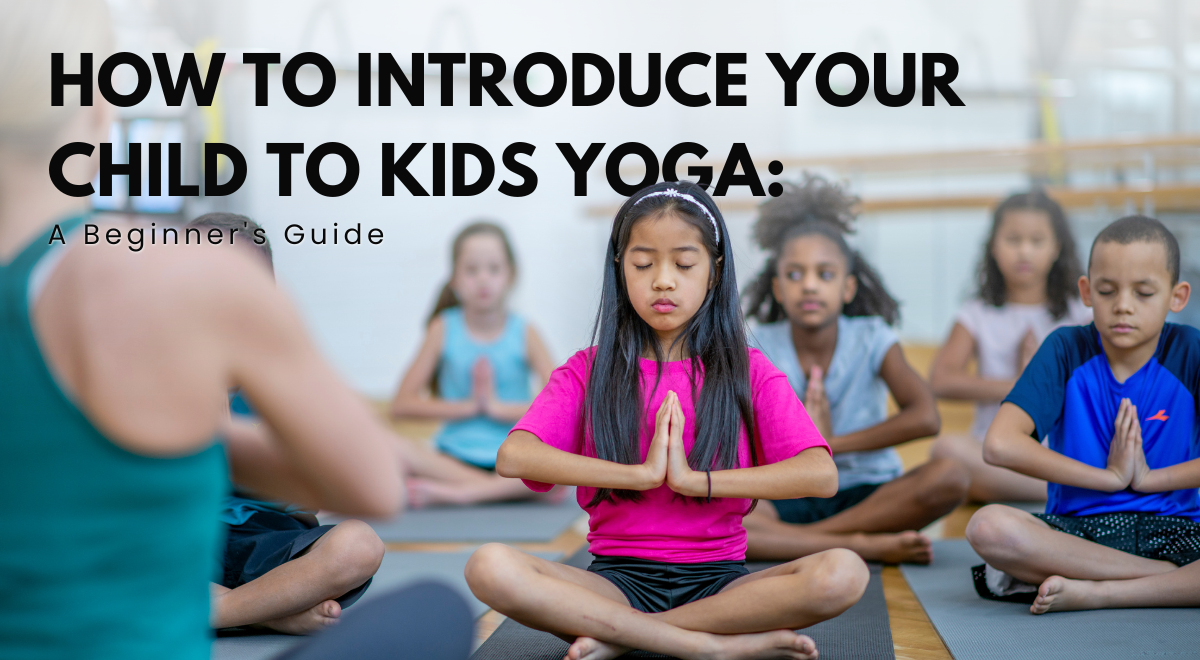
To introduce your child to yoga, begin with five to ten minutes of playful movement rather than a formal adult-style class. Practise together, offer two or three simple poses, use animal names or a short story and finish while your child is still interested. Keep participation voluntary and never force a stretch, pose or breathing exercise.
Children rarely approach yoga like adults. Your child may hold Tree Pose for three seconds, turn Cat–Cow into an animal game and then decide that the yoga mat is a boat. That does not mean the session has failed.
Play, imitation and experimentation are part of a child’s introduction to yoga. The goal is not perfect alignment or prolonged concentration. It is to create a comfortable first experience that your child may want to repeat.
What does kids yoga involve?
Kids yoga adapts physical postures, breathing, rest and attention exercises to a child’s age and stage of development. A children’s session is generally shorter and more playful than an adult class. It may use stories, music, animal movements, pictures or games instead of long pose holds and detailed alignment instructions.
Yoga can be one part of an active childhood, but it should not replace outdoor play, free movement, sports or other physical activities. Singapore’s physical activity guidance recommends that children aged three to six spend at least 180 minutes doing varied physical activities throughout the day, including at least 60 minutes at moderate-to-vigorous intensity. School-age children and youths should receive at least 60 minutes of moderate-to-vigorous physical activity daily.
How much yoga contributes will depend on the pace and intensity of the session. Parents can read the current Singapore physical activity guidance for young children.
How to introduce your child to yoga in seven steps
The easiest way to introduce your child to yoga is to make the first session brief, familiar and pressure-free. You are not trying to complete a perfect sequence. You are helping your child explore a new form of movement.
Let your child see you practise
Children often become curious after seeing a trusted adult enjoy an activity. Roll out a mat and try a comfortable standing pose or gentle stretch without immediately asking your child to participate.
If your child copies you, welcome them. If they watch briefly and walk away, leave the invitation open for another day. Interest is a better starting point than forced cooperation.
Choose a receptive moment
Begin when your child is rested and reasonably settled. Introducing an unfamiliar activity during an emotional outburst or difficult transition can make yoga feel like another demand.
A quiet weekend morning, an after-school movement break or a few minutes before the bedtime routine may work. Watch your child’s energy instead of relying on a rigid schedule.
Keep the first yoga session short
Five to ten minutes is enough for a first session. Younger children may participate for only a few minutes, while an interested older child may continue longer.
Finish before the activity turns into a struggle. A short session that leaves your child willing to practise again is more useful than a long routine completed through persuasion.
Offer choices instead of commands
Ask, “Would you like to be a cat or a butterfly?” A small choice gives your child some control without making the activity complicated.
Use invitations such as “You can try this with me.” Avoid comparing siblings, correcting every movement or encouraging a child to stretch farther than feels comfortable.
Use animals, objects and short stories
Many beginner yoga poses resemble animals, plants or familiar objects. Cat–Cow can become a waking cat, Cobra can look over an imaginary rock and Tree Pose can sway in imaginary wind.
You could create a simple sequence in which your child stands like a mountain, balances like a tree, moves like a cat and finally rests like a small seed. The story only needs to make the movements understandable and enjoyable.
End with a brief quiet activity
Quiet time for a child does not need to mean lying still for ten minutes. Try one comfortable resting position, one relaxed breath or a listening game lasting 15 to 30 seconds.
Some children settle more easily while holding a soft toy or looking at a fixed object. Do not require your child to close their eyes.
Repeat the parts your child enjoyed
Repetition helps children know what to expect. Keep two or three favourite movements and change only one element, such as the story, animal sound, pose order or closing activity.
You can gradually extend the practice when your child remains engaged. There is no need to introduce new poses during every session.
Four beginner yoga movements for children
These simple movements can form a child’s first yoga routine. Demonstrate each one and let your child explore it without demanding a precise shape or holding time.
Mountain Pose
Stand with the feet in a comfortable position and the arms resting beside the body. Invite your child to notice both feet on the floor and grow tall without becoming stiff. Pretend to be a steady mountain while imaginary wind moves around it.
Cat–Cow movement
Begin on hands and knees. Move the spine gently between a rounded and more open position while breathing normally. Your child can make quiet animal sounds. Stop if the hands slip or the wrists become uncomfortable.
Butterfly Pose
Sit comfortably and bring the soles of the feet towards each other. Allow the knees to move gently without pushing them towards the floor. Your child can imagine that the butterfly is visiting different places or choose the colour of its wings.
Tree Pose
Stand near a wall or sturdy support. Place one foot lightly against the opposite ankle or lower leg, avoiding pressure directly against the knee. Wobbling, touching the wall and stepping down are normal parts of learning balance.
A simple 10-minute first yoga session
This short routine gives parents a starting point. The timings are flexible. If your child loses interest before the ten minutes are complete, finish the session without turning it into a problem.
| Time | Activity | Parent’s role |
|---|---|---|
| 1 minute | Choose an animal or story theme | Offer two simple choices |
| 2 minutes | Mountain Pose and gentle reaching | Demonstrate without demanding imitation |
| 3 minutes | Cat–Cow, Butterfly and Tree Pose | Keep movements comfortable and playful |
| 2 minutes | Repeat the child’s favourite movement | Follow their interest |
| 1 minute | Comfortable rest or quiet listening | Allow the eyes to remain open |
| 1 minute | Choose a movement for next time | Finish without evaluating performance |
Do not worry if the sequence changes midway. A child may want to repeat Butterfly Pose three times and skip Tree Pose completely. Following a reasonable preference can help the session remain collaborative.
What age can children start yoga?
There is no single starting age that suits every child. Toddlers may copy simple movements with a caregiver, while preschool and school-age children can gradually follow more structured instructions. Readiness, supervision and individual interest matter more than reaching a particular birthday.
- Toddlers: Use imitation, songs and one or two simple movements. A caregiver should remain actively involved.
- Ages three to five: Keep the session brief and story-led. Expect frequent changes in attention.
- Ages six to nine: Introduce short sequences, simple games and basic body-awareness cues.
- Older children: Explain the purpose of balance, breathing and rest while continuing to provide choices.
A child with an injury, recurring pain, balance difficulty, joint condition or another relevant health concern may need individual advice before joining a yoga activity.
Is yoga safe for children?
Yoga is generally considered a low-risk physical activity when it is practised appropriately, but children can still experience strains, sprains or discomfort. Beginner activities should suit the child’s age and should not include extreme postures or forceful breathing.
The National Center for Complementary and Integrative Health recommends qualified instruction and notes that injuries can occur when yoga is practised incorrectly. Parents can read its current review of yoga effectiveness and safety.
For a safer introduction:
- Use a clear, non-slip practice area.
- Move furniture and sharp objects away from the mat.
- Do not press or pull a child farther into a pose.
- Avoid competitions based on flexibility or holding time.
- Skip advanced inversions and forceful breathing exercises.
- Let your child breathe normally rather than holding their breath.
- Stop for pain, dizziness, numbness or visible distress.
- Tell the instructor about relevant injuries or health conditions.
Yoga should not be used as a punishment or as a demand that a child calm down. If your child does not want to continue, stop the activity and try again another time.
What if your child is not interested in yoga?
Reluctance does not necessarily mean your child dislikes every form of yoga. They may dislike the pace, unfamiliar instructions, the teacher, holding still or simply practising on that particular day.
Try changing one part of the experience:
- Shorten the session.
- Practise alongside your child.
- Use a story instead of naming each pose.
- Let your child choose the first movement.
- Remove the quiet-rest section temporarily.
- Try a different teacher or age group.
If your child continues to dislike yoga, choose another form of movement. Yoga is one option within an active childhood, not a requirement.
Should your child practise yoga at home or attend a class?
Home practice can introduce yoga without travel, cost or pressure. A children’s yoga class can provide age-appropriate sequencing, a prepared practice area, interaction with other children and guidance from an instructor.
When comparing kids yoga classes, ask:
- What age group is the class designed for?
- Does the teacher have experience teaching children?
- How large is the class?
- Can children rest or opt out of an activity?
- Does the class include advanced poses or forceful breathing?
- Can the instructor accommodate relevant health or sensory needs?
- Can a parent discuss the class structure before enrolment?
Families looking for structured instruction can explore Ojas Kids Yoga classes in Singapore, where sessions combine age-appropriate movement, breathing and guided relaxation.
What are the possible benefits of yoga for children?
Research suggests that yoga may support some aspects of children’s physical and emotional wellbeing, but results differ between studies and programs. It is more accurate to describe these as possible benefits than guaranteed outcomes.
A child’s yoga practice may provide opportunities to move, explore balance, notice the body, follow instructions and become familiar with quiet rest. Research on school-based yoga has produced some promising findings, but study quality varies and stronger evidence is still required.
Yoga should not be promoted as a way to increase height, guarantee better memory or treat anxiety. For a closer examination of the subject, read Ojas Yoga’s guide to the possible benefits of yoga for children.
Frequently asked questions about introducing children to yoga
Does a parent need yoga experience to practise with a child?
No. A parent can model a few simple movements without teaching a complete class. Use trusted instructions, stay within a comfortable range and seek qualified guidance when you are uncertain about safety or technique.
How long should a beginner kids yoga session last?
Begin with approximately five to ten minutes and adjust the session according to your child’s age, energy and interest. It is fine to finish earlier when their attention shifts.
How often should children practise yoga?
There is no compulsory schedule. One or two enjoyable sessions each week can provide a manageable introduction. Increase the frequency only when your child remains comfortable and interested.
Can kids yoga improve memory and concentration?
Some research suggests that school-based yoga may support aspects of attention and mental wellbeing, but the evidence remains limited. Do not expect individual poses to directly improve memory, concentration or academic performance.
Should children do breathing exercises?
Children can try simple, relaxed breathing with appropriate supervision. Avoid prolonged breath-holding, rapid breathing and forceful techniques. Stop if the child becomes dizzy, uncomfortable or distressed.
Can children learn yoga from online videos?
A developmentally appropriate video can provide ideas, but an adult should remain nearby when a beginner is practising. Preview the movements and avoid videos that encourage advanced postures, competition or forced flexibility.
Help your child begin yoga with suitable guidance
A child’s first experience of yoga can be simple: a few comfortable movements, a short story and a quiet pause. Keep the activity playful and adjust it to your child’s age and attention.
If your child enjoys practising at home, an age-appropriate class can provide more structure and guidance.


