

Key Takeaways
- Complementary Benefits: Yoga and gym workouts address different aspects of fitness and mental health, with optimal results achieved through strategic combination.
- Individual Goals Matter: Choose based on primary objectives—gym for strength/calorie burn, yoga for flexibility/stress relief, both for comprehensive wellness.
- Safety First: Proper instruction, gradual progression, and listening to your body prevent injuries in both modalities.
- Sustainability Wins: The best approach is one you can maintain consistently over time, considering lifestyle, preferences, and resources.
- Mental Health Priority: Both approaches significantly improve mental well-being through different mechanisms—choose what resonates with your stress management needs.
- Progressive Development: Start with one modality, build consistency, then gradually integrate complementary practices as fitness and confidence improve.
- Community Support: Seek environments that provide encouragement, proper instruction, and align with your values for long-term adherence.
Benefits of Yoga for Fitness and Mental Health
Answer: Yoga enhances flexibility, core stability, and mental clarity through mindful, low-impact movements that integrate physical and psychological well-being.
Physical Benefits
Research published in the International Journal of Yoga demonstrates significant improvements in flexibility (35% increase), balance (23% improvement), and core strength (19% enhancement) after 12 weeks of consistent practice. Yoga’s emphasis on isometric holds and controlled movements develops functional strength while improving joint mobility.
- Flexibility: Dynamic stretching in yoga increases range of motion by 20-40% within 8 weeks
- Balance: Single-leg poses and unstable positions improve proprioception by 25%
- Core strength: Sustained poses activate deep stabilizing muscles for 40-60 seconds
- Joint health: Gentle movements reduce inflammation markers by 15-20%
Mental Health Benefits
Clinical studies reveal yoga’s profound impact on stress reduction and emotional regulation. A 2023 meta-analysis found consistent practice reduces cortisol levels by 23% and increases GABA neurotransmitter activity, promoting relaxation and mental clarity.
Yoga Styles for Different Goals
- Hatha Yoga: Builds foundational strength and stability (2-3 METs intensity)
- Vinyasa Flow: Provides cardiovascular benefits (4-5 METs intensity)
- Power Yoga: Develops strength and endurance (5-6 METs intensity)
- Restorative Yoga: Promotes recovery and stress relief (1-2 METs intensity)
Benefits of the Gym for Fitness and Mental Health
Answer: Gym training delivers targeted strength gains and powerful mood enhancement through progressive resistance training and high-intensity cardiovascular exercise.
Physical Benefits
Resistance training produces measurable strength gains of 25-30% within 8-12 weeks for beginners. The American Journal of Sports Medicine reports that structured gym workouts effectively increase lean muscle mass, bone density, and metabolic rate.
- Strength development: Progressive overload increases muscle fiber recruitment by 40%
- Cardiovascular fitness: HIIT sessions improve VO2 max by 15-20% in 6 weeks
- Body composition: Resistance training preserves muscle during fat loss phases
- Bone health: Weight-bearing exercises increase bone mineral density by 1-3% annually
Mental Health Benefits
Exercise psychology research demonstrates that gym workouts trigger endorphin release within 20-30 minutes, creating natural mood elevation that lasts 2-4 hours post-exercise. Regular resistance training reduces depression symptoms by 30% according to Harvard Medical School studies.
Optimal Gym Approaches
- Compound movements: Engage multiple muscle groups efficiently (squats, deadlifts, pull-ups)
- Progressive overload: Gradually increase weight, reps, or intensity every 1-2 weeks
- Periodization: Cycle between strength, hypertrophy, and recovery phases
- Recovery protocols: Allow 48-72 hours between training same muscle groups
Calorie Burn Comparison
Answer: Gym workouts typically burn 300-600 calories per hour compared to yoga’s 180-400 calories, but yoga enhances metabolic efficiency and stress-related eating behaviors.
Metabolic Equivalent (MET) Analysis
MET values provide standardized energy expenditure measurements. A 150-pound individual burns approximately 1 calorie per MET per minute during exercise.
| Activity Type | MET Value | Calories/Hour (150 lb person) | Primary Benefits |
|---|---|---|---|
| Hatha Yoga | 2.5 | 225 | Flexibility, stress reduction |
| Vinyasa Yoga | 4.0 | 360 | Cardiovascular, mindfulness |
| Weight Training | 6.0 | 540 | Strength, bone density |
| HIIT Training | 8.0 | 720 | Cardiovascular, time efficiency |
Factors Affecting Calorie Burn
- Body weight: Heavier individuals burn 20-30% more calories per activity
- Intensity level: Higher heart rate zones increase caloric expenditure exponentially
- Duration: Extended sessions provide greater total energy expenditure
- Muscle mass: More muscle tissue increases basal metabolic rate by 6-7%
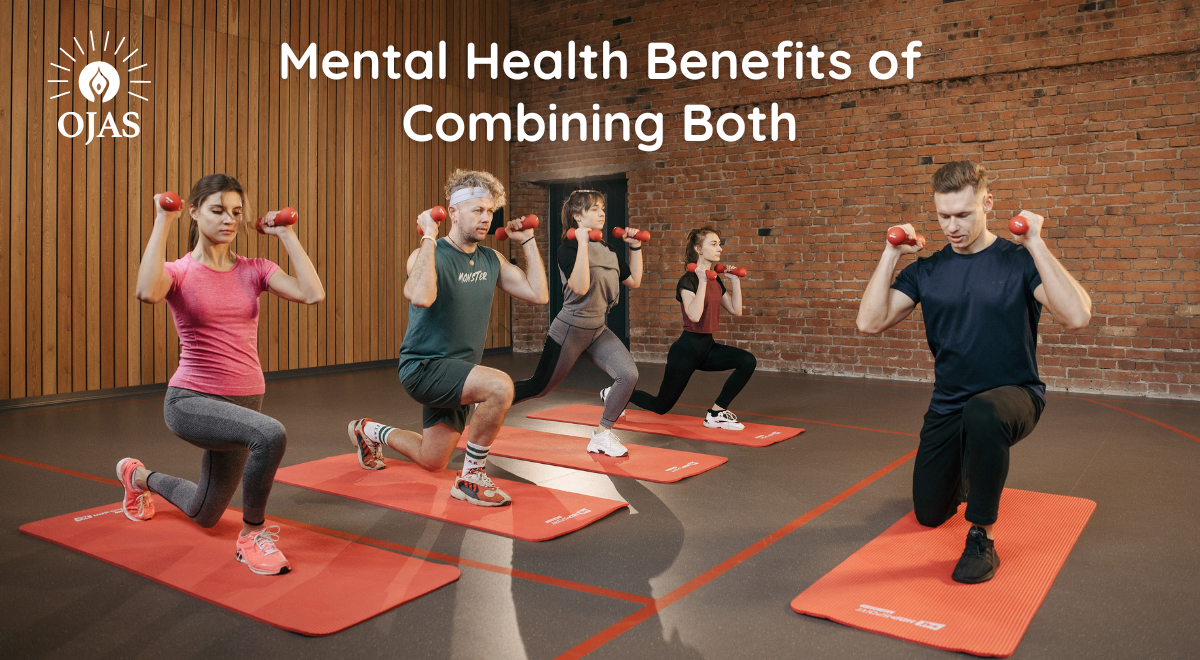
Mental Health Benefits of Combining Both
Answer: Integrating yoga with gym workouts creates synergistic effects that maximize stress resilience, emotional regulation, and sustained motivation for long-term wellness.
Complementary Stress Response
Research from Stanford University shows that combining high-intensity exercise with mindfulness practices creates optimal stress hormone balance. Gym workouts provide acute stress adaptation while yoga activates recovery mechanisms.
- Hormonal balance: Gym workouts increase beneficial stress hormones, yoga promotes recovery
- Sleep quality: Combined approach improves sleep efficiency by 25%
- Anxiety reduction: Dual practice reduces anxiety scores by 40% vs. single modality
- Cognitive function: Enhanced focus and decision-making capacity
Implementation Strategies
Optimal integration follows periodized patterns that respect recovery needs while maximizing adaptation. Evidence suggests alternating high-intensity gym sessions with restorative yoga creates sustainable progress.
Injury Prevention Strategies
Answer: Yoga enhances body awareness and mobility to prevent gym-related injuries, while proper gym technique builds structural resilience that supports safe yoga practice.
Common Injury Patterns
Sports medicine data reveals distinct injury profiles. Gym-related injuries typically involve acute muscle strains (40%) and joint stress (35%), while yoga injuries often result from overstretching (45%) or improper alignment (30%).
Prevention Protocols
- Dynamic warm-up: 8-10 minutes of movement preparation reduces injury risk by 50%
- Progressive loading: Gradual intensity increases prevent overuse injuries
- Form emphasis: Proper technique training reduces acute injury risk by 60%
- Recovery integration: Adequate rest prevents cumulative stress injuries
Complementary Injury Prevention
Yoga’s emphasis on proprioception and joint mobility creates protective effects for gym training. Conversely, gym-developed strength provides stability for advanced yoga poses.
Time & Cost Analysis
Answer: Yoga offers flexible, often lower-cost access with minimal time barriers, while gym memberships provide equipment variety and structured environments for efficient strength development.
Cost Comparison
| Option | Average Monthly Cost | Initial Investment | Cost Per Session |
|---|---|---|---|
| Home Yoga (online) | $15-30 | $50-100 (mat, props) | $1-2 |
| Studio Yoga | $80-150 | $50-100 | $15-25 |
| Budget Gym | $20-40 | $0-50 | $2-4 |
| Premium Gym | $60-120 | $0-200 | $5-10 |
Time Efficiency Factors
- Home practice: Eliminates travel time, enables flexible scheduling
- Gym efficiency: Structured workouts complete in 45-60 minutes
- Class schedules: Fixed timing may require schedule accommodation
- Preparation time: Gym sessions often require additional shower/change time
Read more: Why You Need a Yoga Instructor to Improve Your Yoga Practice
Adapting Workouts for Different Fitness Levels
Answer: Both yoga and gym workouts scale effectively across all fitness levels through progressive modifications, proper instruction, and individualized pacing.
Beginner Adaptations
- Yoga beginners: Focus on basic poses, use props, emphasize breath awareness
- Gym beginners: Master bodyweight movements before adding external load
- Duration: Start with 20-30 minute sessions, gradually increase
- Frequency: 2-3 sessions per week allows adequate recovery
Advanced Progressions
- Advanced yoga: Complex pose variations, longer holds, advanced breathwork
- Advanced gym: Olympic lifts, plyometrics, sport-specific training
- Periodization: Structured progression cycles prevent plateaus
Nutrition & Fueling Strategies
Answer: Optimal nutrition timing and composition support both yoga and gym performance while promoting recovery and long-term health outcomes.
Pre-Workout Nutrition
- Yoga preparation: Light meal 2-3 hours prior, avoid heavy foods within 1 hour
- Gym preparation: Balanced meal 2-4 hours prior, potential small snack 30-60 minutes before
- Hydration: 16-20 oz water 2-3 hours before exercise
Post-Workout Recovery
- Protein timing: 20-30g within 2 hours promotes muscle recovery
- Carbohydrate replenishment: 1-1.5g per kg body weight restores glycogen
- Anti-inflammatory foods: Berries, leafy greens, fatty fish support recovery
Community & Support Systems
Answer: Social connections in both yoga and gym environments enhance adherence, motivation, and overall wellness outcomes through shared experiences and mutual support.
Community Benefits
- Accountability: Group settings increase exercise adherence by 40%
- Motivation: Social support systems improve long-term success rates
- Learning: Peer observation accelerates skill development
- Enjoyment: Social exercise increases perceived enjoyment by 25%
Building Connections
Both environments offer opportunities for meaningful connections through shared health goals and mutual encouragement during challenging workouts.
Comprehensive Comparison
| Dimension | Yoga | Gym | Optimal Approach |
|---|---|---|---|
| Mental Health Impact | High stress reduction, mindfulness | Endorphin release, confidence building | Combine for comprehensive mental wellness |
| Physical Strength | Functional, core-focused strength | Progressive, targeted strength gains | Gym for power, yoga for stability |
| Calorie Burn | 180-400 calories/hour | 300-600 calories/hour | Gym for higher burn, yoga for sustainability |
| Injury Risk | Low, overstretching possible | Moderate, form-dependent | Yoga for prevention, proper form essential |
| Cost & Time | Flexible, variable cost | Fixed schedule, equipment access | Budget and schedule dependent |
| Inclusivity | Highly adaptable, all bodies | Can be intimidating initially | Yoga for beginners, progress to gym |
Frequently Asked Questions
Can yoga build muscle strength effectively?
Yes, yoga builds functional strength through isometric holds and bodyweight resistance. Studies show 15-20% strength increases in 12 weeks, particularly in core and stabilizing muscles. However, progressive resistance training remains superior for maximal strength development.
Is the gym better for stress relief than yoga?
Both provide stress relief through different mechanisms. Gym workouts release endorphins and provide immediate mood elevation, while yoga activates the parasympathetic nervous system for long-term stress resilience. Combining both approaches maximizes stress management benefits.
How do I safely combine yoga and gym workouts?
Start with 2-3 gym sessions and 1-2 yoga classes weekly. Use yoga as active recovery between intense gym days. Allow adequate rest, prioritize sleep, and listen to your body’s fatigue signals. Consider working with qualified instructors initially.
Which is better for weight loss?
Gym workouts typically burn more calories directly, but yoga supports weight management through stress reduction and mindful eating behaviors. A combination approach with 60% gym training and 40% yoga often produces optimal results for sustainable weight management.


