
Here’s the thing: if you’re working in Singapore’s CBD and juggling deadlines, commutes, and a social life, you probably think the only way to stay on top is a punishing workout schedule. But that mindset overlooks something important. The practice of Yoga offers a different path – less frantic, more efficient, and surprisingly powerful.
In this article, you’ll learn why this method of yoga could make more sense than high-intensity workouts for time-pressed professionals, especially in Singapore, and how it could help you reclaim energy without burning out.
What is Ojas Yoga?
Based in Singapore, Ojas Yoga offers classes and programmes that bring this philosophy to life, helping busy professionals recharge, refocus, and sustain their wellbeing through mindful movement. For professionals in the CBD who spend their days under constant pressure, Ojas Yoga offers a practical way to recharge. One that works with your energy, not against it.
Ojas Yoga embraces a mindful way of practising yoga that prioritises awareness over intensity. The focus is on slowing down, moving with purpose, and staying connected to each breath. Instead of chasing repetitions or pushing through fatigue, each posture is treated as a chance to align body and mind.
This approach values quality of movement and calm focus more than sheer effort. It helps release tension, build strength gently, and restore balance after long hours at a desk or on screens.
Why “Less” Can Be More in a Busy Lifestyle
Let’s explore why “doing less” actually works better for those living the high-pressure CBD lifestyle. This section covers efficiency, recovery, and how slowing down can lead to lasting performance gains.
Efficiency over intensity
Traditional workouts often assume that more effort equals more gains: longer sessions, heavier weights, harder reps. But for someone in an office tower in Singapore’s financial district, this model may backfire – time is limited, recovery is minimal, and stress is high.
By contrast, yoga emphasises fewer movements, deeper awareness and a steadier pace. You work smarter rather than longer.
Research comparing yoga to conventional exercise has found that yoga interventions were “equal or superior to exercise in nearly every outcome measured except those involving physical fitness such as fasting blood glucose, kidney function and stress, with the exception of “those involving physical fitness”, for example, VO2max. What this really means: if you only have 30-40 minutes, Ojas Yoga could give you more long-term benefit than a rushed, intense workout.
Stress and the office culture
Working in Singapore’s CBD means deadlines, meetings, client demands and back-to-back screen time. Chronic stress is common. Studies show yoga supports stress reduction, better sleep and improved mental health.
Yoga appeals directly to this environment: it doesn’t aim to exhaust you physically, which sometimes increases stress, but to restore energy (ojas) and balance.
In effect, you’re doing less in the sense of exertion, but achieving more in recovery, clarity and resilience.
Comparing Yoga to Other Workouts
To understand its true value, it helps to see how Ojas Yoga stacks up against other popular workout styles.
Traditional gym workout or HIIT
These involve high heart rate, heavy weights or fast intervals. They’re good for reaching certain fitness goals but can be time-intensive and tough to sustain when work, travel and social commitments take over.
They often demand your full energy, which may leave you drained, especially if you’re also dealing with long desk hours and commuting.
Running or cardio classes
Great for cardiovascular fitness, but also higher impact and more demanding on joints and recovery. For someone who spends eight hours seated, then grabs a treadmill run, the mismatch can feel hard on the body and mind.
Ojas Yoga
- Lower impact, gentler intensity, but consistent benefit.
- Focus on breath, alignment, mindful posture; not simply burning calories.
- Supports mobility, strength, flexibility, and mental clarity.
- More sustainable across months and years of busy professional life.
Research comparing yoga to exercise found stronger effects on mental and emotional outcomes, even if the physical fitness gains were slightly less. For Singapore professionals who care about staying sharp at work and recovering well outside work hours, Ojas Yoga matches the need.
How Ojas Yoga Works for Singapore CBD Professionals
Now that we’ve seen how Yoga differs from other workouts, let’s look at why it fits so well into the lifestyle of busy CBD professionals.
Short, structured sessions
You don’t need long blocks of time. A short, focused Yoga session before work, during lunch break or in the evening can fit neatly into a CBD schedule. Because it’s efficient, you can maintain it even when business gets intense.
Mind-body alignment
Desk jobs often involve slouching, tension in the neck/shoulders and mental fatigue. Yoga brings mindful posture, breath control and presence. These fix both physical strain and cognitive load.
Recovery built-in
Rather than pushing until exhaustion, Yoga includes rest, adjustment, and listening to your body. This supports better recovery. In turn, you’re more ready for the next day’s demands, and not running on fumes.
Better focus and resilience
The calming, awareness-based aspect of Yoga boosts concentration and emotional steadiness, which benefits professionals handling complex tasks, client meetings, and negotiations. Yoga serves as both a work-in and a work-out:
- The work-in nurtures mental clarity, emotional resilience, and focus.
- The work-out aspect enhances physical strength, flexibility, and stamina, while
This balance of body and mind helps you stay sharp and composed, even under pressure.
Basic Tips for Starting Yoga
Before diving in, here are practical ways to build a Yoga routine that suits your pace, space, and time.
Set realistic sessions
Start with 2-3 sessions a week, each 25-35 minutes. Our classes offer varying durations and intensities, so it’s important to choose the one that suits your current energy level and time availability. Aim for consistency and find a balance that works for you, rather than pushing for maximum effort each time. Focus on how Yoga can fit into your routine and support your goals.
Focus on breath and alignment
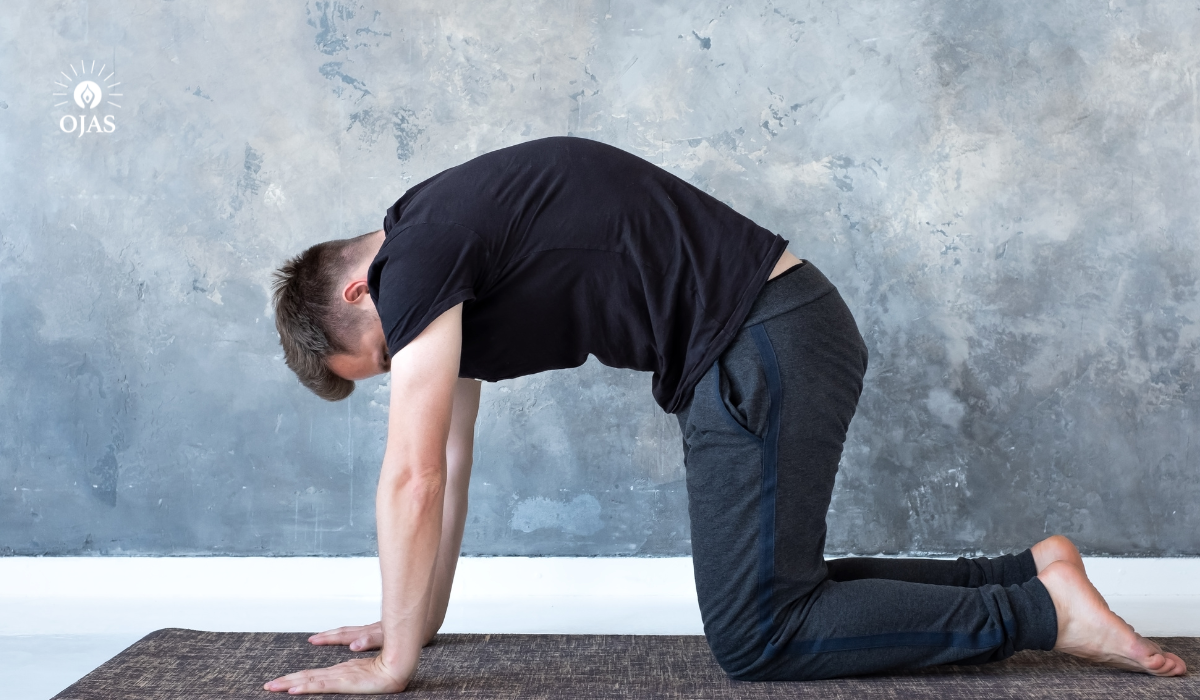
Pick a few key postures that emphasise spine length, shoulder openness and hip mobility (desk posture fixes). Coordinate movement with deep, steady breath—this is central to generating ojas.
Mindful recovery
After each session, take a few minutes of quiet lying-down or seated meditation. Let thoughts settle. This mental pause builds the carry-over benefit into your day.
Classroom or guided app
If you prefer structure, join a session or use a guided class that emphasises mindful pacing, rather than one that treats yoga like a HIIT workout. Because yoga is about doing less in terms of frantic movement but more in terms of connection, choosing the right class matters.
Adapt for time-poor days
On days packed with meetings or travel, reduce the session to 15-20 minutes. Still do the breath, a few postures, and rest. It’s better than skipping altogether. Even short sessions support your “ojas reservoir”.
Why Efficiency Matters More than Ever
This section explains why efficiency, not exertion, is the foundation of modern wellness, especially for those living and working in fast-paced Singapore.
Singapore’s CBD professionals face intense pressures: rapid pace, long hours, and high competition. Traditional workout culture says more is better. But this can lead to burnout, overtraining, injury or simply neglect because “I’m too busy”. Yoga reframes this: it says your wellness comes from sustained habits, not occasional extremes. In that sense, doing less doesn’t mean being lazy – it means being strategic and sustainable. If you keep up consistent yoga, you may sidestep the “weekend warrior” trap, the injury downtime, or the mental crash that follows too hard training.
Addressing Common Objections
Before wrapping up, let’s clear up a few common questions that professionals often ask when considering Yoga for the first time.
“I’m not flexible.”
That’s exactly why Yoga works. You don’t need to touch your toes or twist like a gymnast to begin. Flexibility comes with steady practice, not before it. Yoga helps you move within your own range safely, improving mobility and comfort over time – no pressure, just progress.
“Will I build strength or muscle with Yoga?”
Yes, though perhaps not in the same way as heavy resistance training. Yoga builds functional strength, stability, posture and movement quality. For many professionals, those gains deliver more relevant returns – less back pain, better posture, and more stamina.
“Isn’t yoga too slow, too soft?”
That depends on your aim. If your aim is to burn maximum calories in 20 minutes, you may feel it’s slow. But if your aim is efficient wellness, full engagement and long-term resilience, then the pace of Yoga matches you..
“I don’t have flexible hours for classes.”
That’s fine. One of the strengths of Yoga is that it can slot into small windows. Early morning before the traffic hits, lunch break, or just after work in your apartment. Short, efficient, effective.
Realistic Plan for a Busy Singapore Professional
Here’s how you can easily add Yoga to your week, even with a packed schedule. Consider this as a starting point to make Yoga a sustainable part of your routine.
- Choose a time that works for you
Decide whether you prefer to practise in the morning, during lunch, or in the evening. Pick a time that fits your lifestyle and energy levels. - Commit to 2-3 sessions per week
Make Yoga a regular part of your routine by adding it to your calendar just like any other meeting or work commitment. Consistency is key, so set aside specific times for your sessions. - Get a colleague or friend involved
Find a buddy to join you in class or hold each other accountable. It’s easier to stick to your commitment when you have someone to motivate you along the way. - Show up to class
Ensure that you actually make it to class, no excuses. Treat it like a professional meeting – important and non-negotiable. - Reward yourself
At the end of the week, give yourself a reward – whether it’s a healthy treat or something sweet. Celebrate the consistency and progress you’ve made in taking care of yourself.
By following this simple plan, you’ll integrate Yoga into your busy life in a manageable and sustainable way, and reap the benefits of both physical and mental clarity.
Maintain this 3-session rhythm for 4-6 weeks, then decide whether you want to add a weekend session or mix in another style. But the core remains: sustainable, efficient.
Conclusion
If your schedule in Singapore’s CBD is packed and your mind is constantly engaged, shifting your fitness approach can make a big difference. The practice of Yoga allows you to adopt a smarter path – doing less in terms of sheer movement, but gaining more in balance, resilience and vitality.
By choosing efficient movement, mindful breath, focused recovery and consistency, you support not just your body but your mindset and your performance. For professionals who’ve been chasing density of workouts and hours in the gym, this could be a welcome change.


